Flint knives
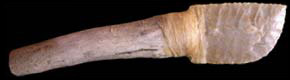
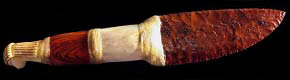
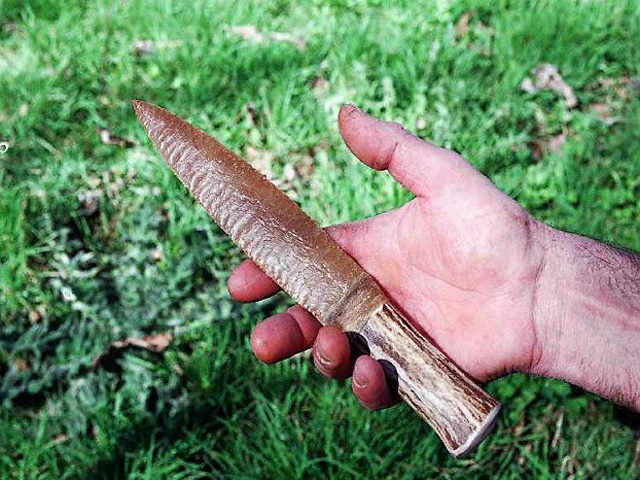
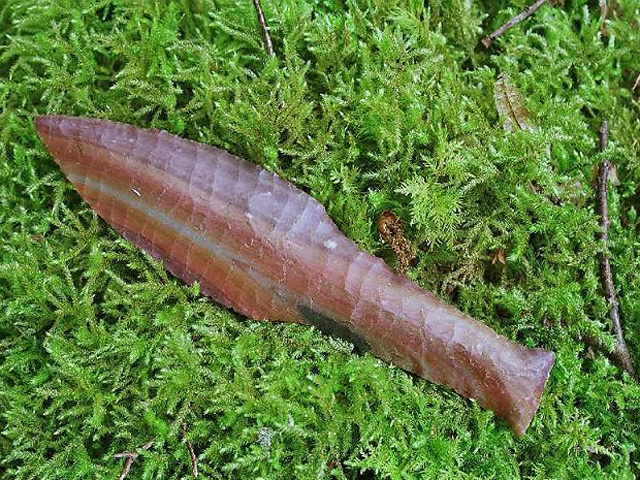
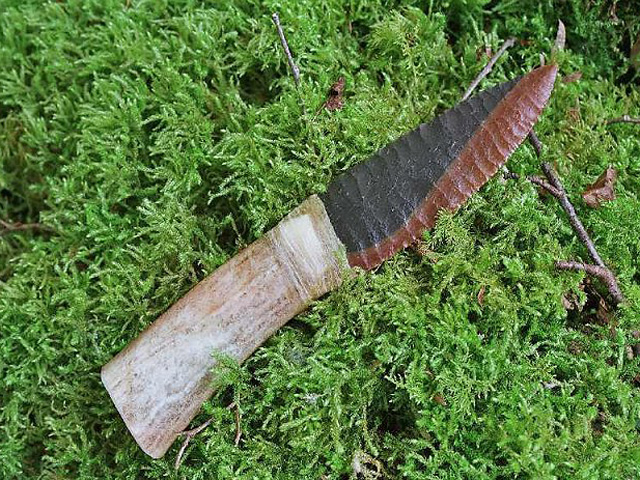
Bernard made replicas of Chalcolithic and Neolithic knives using the same techniques and materials as 4,000 years ago: flint, plant wood, reindeer or deer antler, hide glue, birch-bark pitch, black glue, sinew, skill and passion. These knives draw on archaeological models such as Scandinavian daggers, the Gebel el-Arak knife, Charavines daggers, and Mayan knives... They are sometimes carved with animal or anthropomorphic motifs. All are fully functional, and remarkably effective on meat and hide.
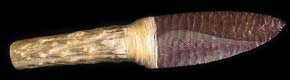
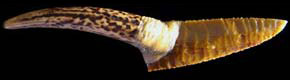
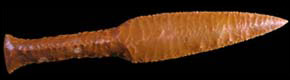
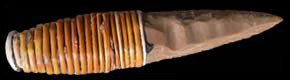
The six knife families
Chalcolithic
Knives inspired by Chalcolithic and Neolithic blades, handle in deer or reindeer antler, fixed with glue and ligatures.
Corner Tangs
Point and angled hafting tang, typical of certain North American lithic industries.
Scandinavian daggers
Replicas of the famous Danish type III and IV daggers, pressure-flaked over the whole surface to imitate polished metal.
Charavines
Based on the Neolithic daggers found at the Charavines lakeside site (Isère, France).
Skinners
Short, curved blade designed for skinning, in the tradition of Native American knives.
Sculptures
Handles carved with animal or anthropomorphic motifs inspired by prehistoric art.