Knapping basics
Knapping flint... Quite a program! Who hasn't, as a child or an adult, picked up two pebbles and tried, often in vain, to play at being a prehistoric human, making a tool with nothing but what was lying on the ground? These pages cover the basic knowledge and gather the main points raised during the workshops run by Bernard Ginelli.
01 — Safety & etiquette
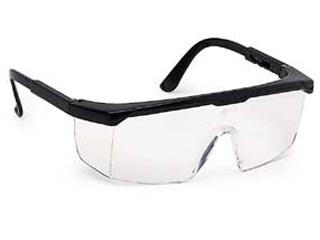
Safety rules
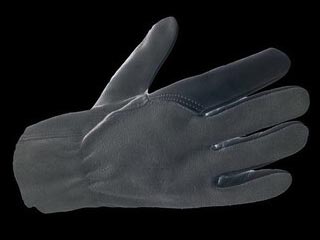
"Every flint spall is a razor blade waiting to happen!" You need to protect your hands (gloves) and eyes, and never let children touch un-dulled flakes. In high doses, flint dust is harmful to the lungs: it's best to knap outdoors or in a well-ventilated space.
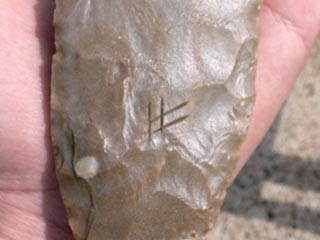
Etiquette and ethics
Respect archaeological sites and the work of archaeologists: never knap on an archaeological site, and never abandon or bury your knapping debris (take it to a waste facility). Always mark your finished pieces — for example with a diamond grinding wheel — so they can never be mistaken for genuine archaeological finds.
02 — Which materials to knap?
Early humans mainly knapped flint, but also other rocks, when flint wasn't available in sufficient quantity or quality. Choosing a rock to knap comes down to two main criteria: its hardness (on the Mohs scale, flint reaches about 8, higher than hardened steel) and its physical properties — a conchoidal, non-laminated fracture, which allows controlled reduction.
The rest of the program
These chapters made up the table of contents for the knapping-basics section on the original site. Some were never written and remain, for now, "coming soon":
- Safety & etiquette — online above
- Which materials to knap? — online above
- The knapper's tools — coming soon
- A bit of physics — coming soon
- Common knapping mistakes — coming soon
- Which tools to knap? — coming soon
- Biface knapping — coming soon
- Blade reduction — coming soon
- Pressure flaking — coming soon
- Other reduction techniques — coming soon
To go further right now, head to the reduction sequences, which show the complete making of several objects in pictures.